The Central Teacher Eligibility Test (CTET) 2026 is a national-level examination conducted for candidates who aspire to become teachers for Classes I to VIII in central government and CBSE-affiliated schools across India. Qualifying CTET is mandatory for teaching positions in schools under the Government of India and many private institutions.
This comprehensive guide explains what is CTET 2026, its purpose, who conducts it, how many times it is held in a year, who are eligible to apply, complete CTET 2026 exam pattern, number of questions in Paper 1 and Paper 2, detailed syllabus, qualifying marks, certificate validity, and preparation strategy.
What is CTET 2026?
CTET stands for Central Teacher Eligibility Test. It is conducted to determine the eligibility of candidates for appointment as teachers in elementary classes.
The examination is conducted as per the provisions of the Right of Children to Free and Compulsory Education Act, 2009. Passing CTET 2026 is one of the essential qualifications for appointment as a teacher in:
- Kendriya Vidyalayas
- Navodaya Vidyalayas
- Central Tibetan Schools
- Schools under Union Territories
- Many CBSE-affiliated private schools
CTET is an eligibility test and not a recruitment examination. After qualifying CTET 2026, candidates must apply separately for teaching vacancies announced by recruitment authorities.
Who Conducts CTET 2026?
CTET 2026 is conducted by the Central Board of Secondary Education (CBSE). CBSE releases the official notification, information bulletin, syllabus, exam dates, application form, admit card, answer key, and result.
The National Council for Teacher Education (NCTE) prescribes the minimum qualifications and guidelines for teachers, and CBSE conducts the examination accordingly.
How Many Times is CTET Conducted in a Year?
CTET 2026 is generally conducted twice a year:
- One session in the first half of the year
- One session in the second half of the year
The exact dates are announced through the official notification. There is no limit on the number of attempts, and candidates can appear multiple times to improve their score.
Who Are Eligible to Apply?
Eligibility for CTET 2026 depends on the paper applied for.
Eligibility for CTET 2026 Paper 1 (Classes I to V)
Candidates must fulfill any one of the following conditions:
- Passed Senior Secondary (or equivalent) with at least 50 percent marks and passed or appearing in final year of 2-year Diploma in Elementary Education
- Passed Senior Secondary with at least 45 percent marks and passed or appearing in final year of 2-year Diploma in Elementary Education as per NCTE norms
- Passed Senior Secondary with at least 50 percent marks and passed or appearing in final year of 4-year Bachelor of Elementary Education (B.El.Ed)
- Passed Senior Secondary with at least 50 percent marks and passed or appearing in final year of 2-year Diploma in Education (Special Education)
- Graduation and passed or appearing in final year of 2-year Diploma in Elementary Education
Eligibility for CTET 2026 Paper 2 (Classes VI to VIII)
Candidates must fulfill any one of the following:
- Graduation and passed or appearing in final year of 2-year Diploma in Elementary Education
- Graduation with at least 50 percent marks and passed or appearing in 1-year Bachelor in Education (B.Ed)
- Graduation with at least 45 percent marks and passed or appearing in 1-year B.Ed as per NCTE norms
- Senior Secondary with at least 50 percent marks and passed or appearing in final year of 4-year B.A./B.Sc.Ed or B.A.Ed/B.Sc.Ed
- Graduation with at least 50 percent marks and passed or appearing in 1-year B.Ed (Special Education)
Relaxation in qualifying marks is applicable to reserved category candidates as per government norms.
Purpose of CTET 2026
The objectives of CTET 2026 include:
- Establishing national standards for teacher eligibility
- Improving quality of teaching in elementary schools
- Assessing child development understanding
- Ensuring teachers are aware of inclusive education practices
- Promoting professional competence among educators
CTET evaluates both subject knowledge and pedagogical understanding.
CTET 2026 Exam Pattern
CTET 2026 consists of two papers:
- Paper 1: For candidates intending to teach Classes I to V
- Paper 2: For candidates intending to teach Classes VI to VIII
Candidates who wish to teach Classes I to VIII must appear for both papers.
Common Features of CTET 2026
- Type of Questions: Multiple Choice Questions
- Total Questions: 150
- Total Marks: 150
- Duration: 2 hours 30 minutes
- Negative Marking: No
- Each question carries one mark
CTET 2026 Paper 1 Exam Pattern
Paper 1 is for Primary Stage (Classes I to V).
Total Questions in Paper 1
- Total Questions: 150
- Total Marks: 150
- All questions are compulsory
Section-Wise Distribution
- Child Development and Pedagogy: 30 Questions
- Language I: 30 Questions
- Language II: 30 Questions
- Mathematics: 30 Questions
- Environmental Studies: 30 Questions
Each section carries equal weightage.
CTET 2026 Paper 2 Exam Pattern
Paper 2 is for Upper Primary Stage (Classes VI to VIII).
Total Questions in Paper 2
- Total Questions: 150
- Total Marks: 150
- All questions are compulsory
Section-Wise Distribution
- Child Development and Pedagogy: 30 Questions
- Language I: 30 Questions
- Language II: 30 Questions
- Mathematics and Science: 60 Questions
OR
- Social Studies/Social Science: 60 Questions
Candidates must select one subject-specific section.
CTET 2026 Qualifying Marks
- General Category: 60 percent (90 out of 150)
- Reserved Categories: Relaxation as per government rules
The CTET certificate is valid for lifetime.
Detailed CTET 2026 Syllabus
The Central Teacher Eligibility Test (CTET) 2026 syllabus is officially structured for two papers — Paper I (Primary Stage: Classes I to V) and Paper II (Elementary Stage: Classes VI to VIII). The syllabus is designed to assess candidates’ understanding of child development, pedagogy, subject knowledge, and teaching aptitude in accordance with NCERT curriculum and NCTE guidelines.
Below is the complete and detailed syllabus for CTET 2026.
CTET 2026 Paper I Syllabus (Classes I to V – Primary Stage)
Paper I consists of 150 questions divided equally across five sections.
I. Child Development and Pedagogy – 30 Questions
This section focuses on educational psychology of teaching and learning relevant to the age group 6–11 years.
a) Child Development (Primary School Child) – 15 Questions
• Concept of development and its relationship with learning
• Principles of development of children
• Influence of heredity and environment
• Socialization processes: role of teacher, parents and peers
• Piaget, Kohlberg and Vygotsky: theories and critical perspectives
• Concepts of child-centered and progressive education
• Critical perspective of intelligence
• Multi-dimensional intelligence
• Language and thought
• Gender as a social construct; gender roles and bias
• Individual differences among learners
• Assessment for learning and assessment of learning
• Continuous and Comprehensive Evaluation (CCE)
• Formulating appropriate questions for assessment
b) Concept of Inclusive Education and Understanding Children with Special Needs – 5 Questions
• Addressing learners from diverse backgrounds
• Children with learning difficulties and impairments
• Addressing talented and specially-abled learners
c) Learning and Pedagogy – 10 Questions
• How children think and learn
• Basic processes of teaching and learning
• Learning as a social activity
• Child as a problem solver and scientific investigator
• Understanding children’s errors
• Cognition and emotions
• Motivation and learning
• Factors contributing to learning
II. Mathematics – 30 Questions
a) Content – 15 Questions
• Geometry
• Shapes and spatial understanding
• Solids around us
• Numbers
• Addition and subtraction
• Multiplication and division
• Measurement
• Weight
• Time
• Volume
• Data handling
• Patterns
• Money
b) Pedagogical Issues – 15 Questions
• Nature of Mathematics and logical thinking
• Understanding children’s reasoning strategies
• Place of Mathematics in curriculum
• Language of Mathematics
• Community Mathematics
• Evaluation methods
• Error analysis
• Diagnostic and remedial teaching
III. Environmental Studies – 30 Questions
a) Content – 15 Questions
i. Family and Friends
• Relationships
• Work and play
• Animals
• Plants
ii. Food
iii. Shelter
iv. Water
v. Travel
vi. Things we make and do
b) Pedagogical Issues – 15 Questions
• Concept and scope of EVS
• Significance of integrated EVS
• Learning principles
• Relation to Science and Social Science
• Activities and experimentation
• Discussion and practical work
• Teaching materials and aids
• Continuous and Comprehensive Evaluation
IV. Language I – 30 Questions
a) Language Comprehension – 15 Questions
• Two unseen passages (one prose/drama and one poem)
• Questions on comprehension, inference, grammar and verbal ability
b) Pedagogy of Language Development – 15 Questions
• Learning and acquisition
• Principles of language teaching
• Role of listening and speaking
• Grammar in communication
• Challenges in diverse classrooms
• Language skills evaluation
• Teaching-learning materials
• Remedial teaching
V. Language II – 30 Questions
a) Comprehension – 15 Questions
• Two unseen prose passages
• Questions on comprehension, grammar and verbal ability
b) Pedagogy of Language Development – 15 Questions
• Learning and acquisition
• Language teaching principles
• Language skills
• Evaluation methods
• Teaching materials
• Remedial teaching
CTET 2026 Paper II Syllabus (Classes VI to VIII – Elementary Stage)
Paper II also contains 150 questions.
I. Child Development and Pedagogy – 30 Questions
The focus is on educational psychology of teaching and learning relevant to the age group 11–14 years.
a) Child Development (Elementary School Child) – 15 Questions
• Concept of development and learning
• Principles of child development
• Heredity and environment
• Socialization processes
• Piaget, Kohlberg and Vygotsky
• Intelligence theories
• Gender roles and educational practice
• Individual differences
• Assessment for learning and assessment of learning
• School-based assessment
• Question framing for critical thinking
b) Inclusive Education – 5 Questions
• Learners from disadvantaged backgrounds
• Children with learning difficulties
• Talented and specially-abled learners
c) Learning and Pedagogy – 10 Questions
• Learning theories
• Social context of learning
• Child as scientific investigator
• Motivation
• Factors affecting learning
II. Mathematics and Science – 60 Questions
This section is for candidates opting for Mathematics and Science teaching.
(i) Mathematics – 30 Questions
Content – 20 Questions
• Number System
• Whole numbers
• Integers
• Fractions
• Algebra (Introduction, Ratio and Proportion)
• Geometry (2D and 3D shapes)
• Symmetry
• Construction using instruments
• Mensuration
• Data handling
Pedagogical Issues – 10 Questions
• Nature of Mathematics
• Logical thinking
• Evaluation methods
• Remedial teaching
• Problems in teaching Mathematics
(ii) Science – 30 Questions
Content – 20 Questions
• Food (Sources, Components, Cleaning)
• Materials of daily use
• The world of the living
• Moving things, people and ideas
• Electric current and circuits
• Magnets
• Natural phenomena
• Natural resources
Pedagogical Issues – 10 Questions
• Nature and structure of Science
• Aims and objectives
• Observation and experimentation
• Integrated approach
• Evaluation (cognitive, psycho-motor, affective)
• Remedial teaching
III. Social Studies / Social Sciences – 60 Questions
This section is for candidates opting for Social Science teaching.
a) Content – 40 Questions
History
• When, Where and How
• Earliest societies
• First farmers and herders
• First cities
• Early states
• First empire
• Delhi Sultans
• Mughals
• Colonial rule
• Revolt of 1857
• Nationalist movement
• India after independence
Geography
• Earth in the solar system
• Globe
• Environment
• Air and water
• Resources
• Agriculture
• Human environment
Social and Political Life
• Diversity
• Government
• Democracy
• Constitution
• Parliamentary government
• Judiciary
• Social justice
b) Pedagogical Issues – 20 Questions
• Concept and nature of Social Science
• Classroom processes
• Critical thinking
• Enquiry-based learning
• Sources (primary and secondary)
• Project work
• Evaluation methods
IV. Language I – 30 Questions
• Language comprehension – 15 Questions
• Pedagogy of language development – 15 Questions
V. Language II – 30 Questions
• Comprehension – 15 Questions
• Pedagogy of language development – 15 Questions
CTET aspirants can download the Syllabus of the CTET from the following:
– CTET Syllabus : Click here
Important Note
For detailed subject-wise content alignment, candidates are advised to refer to NCERT textbooks from Classes I to VIII as the syllabus is based primarily on the NCERT curriculum.
The CTET 2026 syllabus emphasizes conceptual understanding, pedagogical knowledge, child psychology, and application-based learning rather than rote memorization. Candidates must focus equally on subject content and teaching methodology to qualify successfully.
CTET 2026 Preparation Strategy
- Understand the complete syllabus thoroughly
- Focus strongly on Child Development and Pedagogy
- Practice previous year question papers
- Take mock tests regularly
- Improve time management
- Revise consistently
Conceptual clarity and pedagogy understanding are key to scoring high in CTET 2026.
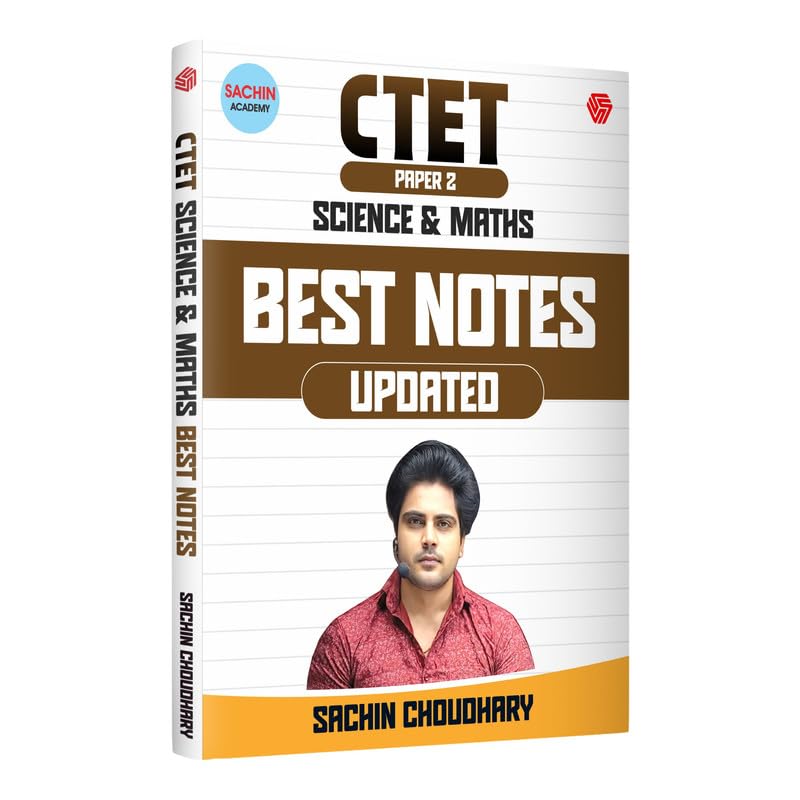
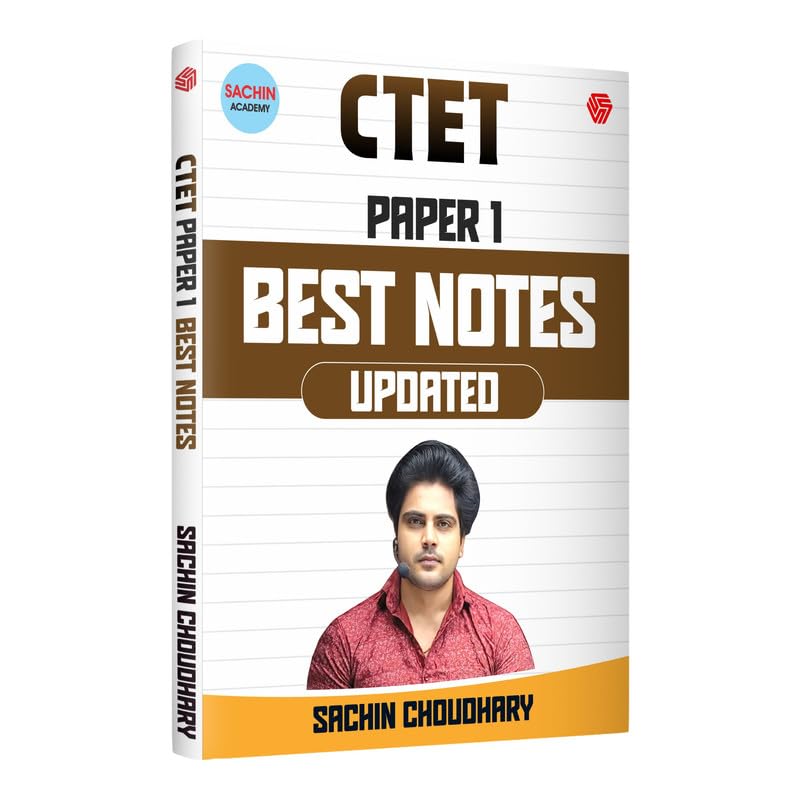
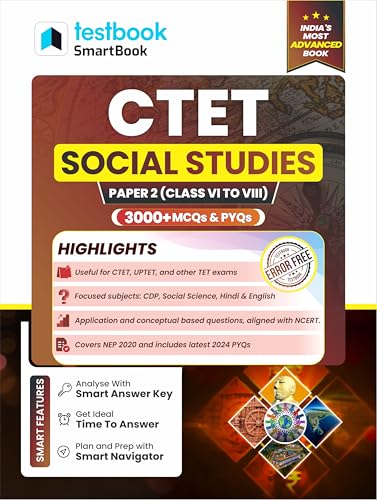
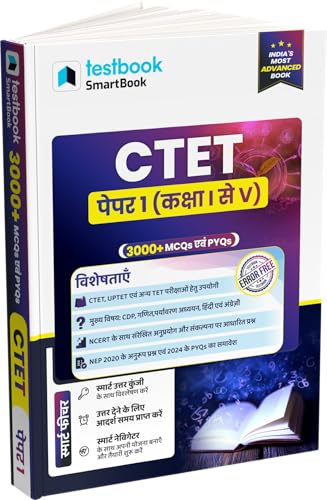
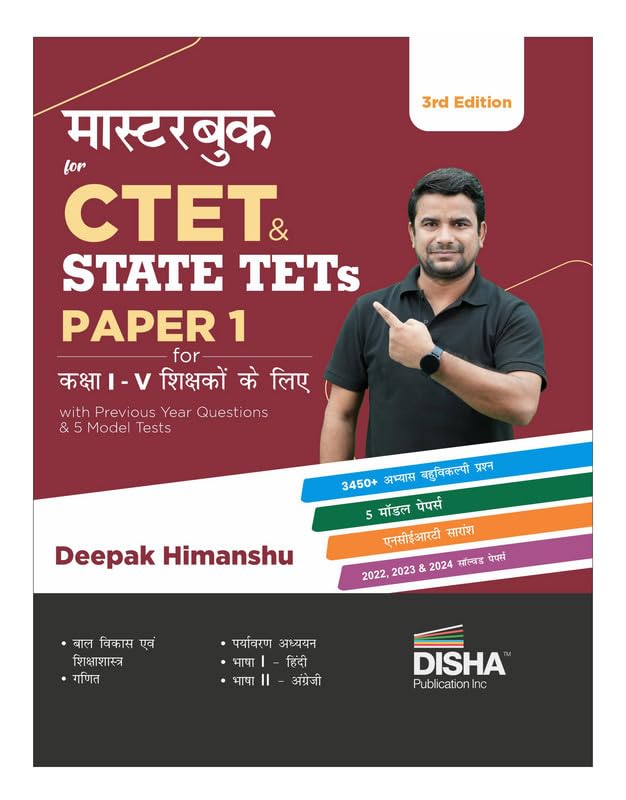
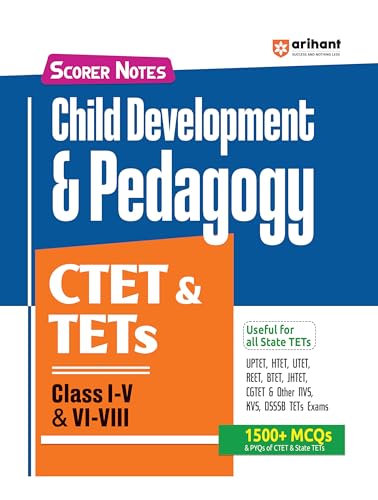
CTET Books for CTET Preparation



Benefits of Qualifying CTET 2026
- Eligibility for central government teaching jobs
- Lifetime validity certificate
- Better career growth
- Recognition as a qualified teacher
- Required qualification for many state and private schools
FAQ – CTET Syllabus and Exam Pattern
- What is CTET 2026?
Ans: CTET 2026 is a national-level teacher eligibility test for Classes I to VIII conducted to determine eligibility for teaching positions. - Who conducts CTET 2026?
Ans: CTET 2026 is conducted by the Central Board of Secondary Education (CBSE). - How many times is CTET conducted in a year?
Ans: CTET is generally conducted twice a year. - Who are eligible to apply for CTET 2026?
Ans: Candidates with Senior Secondary or Graduation along with Diploma in Elementary Education or B.Ed qualification as per NCTE norms are eligible to apply. - How many questions are asked in CTET Paper 1?
Ans: A total of 150 questions are asked in Paper 1, with 30 questions from each section. - How many questions are asked in CTET Paper 2?
Ans: A total of 150 questions are asked in Paper 2, including 60 questions from the subject-specific section. - Is there negative marking in CTET 2026?
Ans: No, there is no negative marking in CTET 2026. - What are the qualifying marks for CTET 2026?
Ans: General category candidates must score 90 out of 150 marks to qualify.
