CTET 2026 Mathematics for Paper I is an important section for candidates preparing for the Primary Stage (Classes I–V). This paper focuses on strengthening conceptual understanding of fundamental mathematical topics along with pedagogical approaches used in teaching Mathematics at the elementary level. It covers key content areas such as Geometry, Shapes and Spatial Understanding, Solids Around Us, Numbers, Basic Operations, Measurement, Time, Volume, Data Handling, Patterns, and Money. In addition, it includes pedagogical issues like logical thinking, error analysis, evaluation methods, and remedial teaching strategies. A strong foundation in CTET 2026 Mathematics for Paper I helps candidates develop problem-solving skills and classroom application strategies required for the CTET examination conducted by the Central Board of Secondary Education under the Central Teacher Eligibility Test.
Table of Contents
CTET 2026 Mathematics for Paper I (Classes I–V) – MCQs and Answers
Mathematics – Content
- What is the sum of 458 + 376?
a) 824
b) 834
c) 844
d) 854
Answer: b

- The difference between 900 and 475 is:
a) 415
b) 425
c) 435
d) 445
Answer: b
- 36 × 5 =
a) 150
b) 160
c) 170
d) 180
Answer: d
- 144 ÷ 12 =
a) 10
b) 11
c) 12
d) 14
Answer: c
- Which of the following is a prime number?
a) 21
b) 29
c) 39
d) 49
Answer: b
- A triangle has how many sides?
a) 2
b) 3
c) 4
d) 5
Answer: b
- A square has how many lines of symmetry?
a) 2
b) 3
c) 4
d) 5
Answer: c
- A cube has how many faces?
a) 4
b) 5
c) 6
d) 8
Answer: c
- The place value of 5 in 5,432 is:
a) 5
b) 50
c) 500
d) 5000
Answer: d
- Which unit is used to measure weight?
a) Meter
b) Litre
c) Kilogram
d) Second
Answer: c
- 1 meter =
a) 10 cm
b) 100 cm
c) 1000 cm
d) 10000 cm
Answer: b
- How many minutes are there in 2 hours?
a) 100
b) 110
c) 120
d) 140
Answer: c
- 500 ml equals:
a) 0.5 litre
b) 5 litre
c) 50 litre
d) 500 litre
Answer: a
- Which shape has no corners?
a) Square
b) Circle
c) Rectangle
d) Triangle
Answer: b
- ¾ + ¼ =
a) 1
b) 2
c) ¾
d) ½
Answer: a
- 25% of 200 is:
a) 25
b) 40
c) 50
d) 60
Answer: c
- Perimeter of a square of side 5 cm is:
a) 10 cm
b) 15 cm
c) 20 cm
d) 25 cm
Answer: c
- Which solid has a circular base?
a) Cube
b) Cuboid
c) Cone
d) Pyramid
Answer: c
- 9 × 9 =
a) 72
b) 81
c) 91
d) 99
Answer: b
- 1000 ÷ 10 =
a) 10
b) 50
c) 100
d) 1000
Answer: c
- Which is the smallest 4-digit number?
a) 999
b) 1000
c) 1001
d) 1010
Answer: b
- Roman numeral for 50 is:
a) L
b) C
c) V
d) X
Answer: a
- 3/5 as decimal is:
a) 0.3
b) 0.5
c) 0.6
d) 0.8
Answer: c
- Area of rectangle =
a) l + b
b) l × b
c) 2(l+b)
d) b/l
Answer: b
- Which is an even number?
a) 37
b) 45
c) 52
d) 61
Answer: c
- If today is Monday, after 3 days it will be:
a) Wednesday
b) Thursday
c) Friday
d) Sunday
Answer: b
- 7 × 8 =
a) 54
b) 56
c) 58
d) 64
Answer: b
- 1 kg =
a) 100 g
b) 500 g
c) 1000 g
d) 10000 g
Answer: c
- Which graph represents data using bars?
a) Pie chart
b) Bar graph
c) Line graph
d) Histogram
Answer: b
- 0 is a
a) Natural number
b) Whole number
c) Prime number
d) Odd number
Answer: b
- 2³ =
a) 6
b) 8
c) 9
d) 12
Answer: b
- The largest 3-digit number is:
a) 899
b) 900
c) 999
d) 1000
Answer: c
- A cuboid has how many vertices?
a) 6
b) 8
c) 10
d) 12
Answer: b
- 15 + 0 =
a) 0
b) 1
c) 15
d) 150
Answer: c
- Money is measured in:
a) kg
b) litre
c) rupees
d) meter
Answer: c
- Which fraction is smallest?
a) 1/2
b) 1/3
c) 1/4
d) 1/5
Answer: d
- 45 ÷ 5 =
a) 7
b) 8
c) 9
d) 10
Answer: c
- 60 minutes =
a) 1 hour
b) 2 hours
c) 30 min
d) 45 min
Answer: a
- Pattern: 2, 4, 6, 8, __
a) 9
b) 10
c) 11
d) 12
Answer: b
- A right angle equals:
a) 45°
b) 60°
c) 90°
d) 120°
Answer: c
- 5 × 0 =
a) 0
b) 5
c) 1
d) 10
Answer: a
- 100 cm =
a) 1 m
b) 10 m
c) 1000 m
d) 0.1 m
Answer: a
- Which is divisible by 3?
a) 14
b) 18
c) 22
d) 25
Answer: b
- Volume is measured in:
a) sq. units
b) cubic units
c) meters
d) grams
Answer: b
- ½ of 50 =
a) 20
b) 25
c) 30
d) 35
Answer: b
- 8 + 7 =
a) 13
b) 14
c) 15
d) 16
Answer: c
- 81 ÷ 9 =
a) 8
b) 9
c) 10
d) 11
Answer: b
- Which is an odd number?
a) 24
b) 36
c) 41
d) 50
Answer: c
- A leap year has:
a) 365 days
b) 366 days
c) 364 days
d) 360 days
Answer: b
- A cylinder has how many curved surfaces?
a) 0
b) 1
c) 2
d) 3
Answer: b
Pedagogical Issues
- Mathematics mainly develops:
a) Memory
b) Logical thinking
c) Drawing skills
d) Singing
Answer: b
- Children learn Mathematics best through:
a) Rote learning
b) Activities
c) Punishment
d) Memorization
Answer: b
- Error analysis helps teacher to:
a) Punish students
b) Understand misconceptions
c) Ignore mistakes
d) Fail students
Answer: b
- Diagnostic test is used to:
a) Rank students
b) Identify learning gaps
c) Promote students
d) Entertain
Answer: b
- Remedial teaching focuses on:
a) Fast learners
b) Weak areas
c) Exams only
d) Homework
Answer: b
- Mathematics teaching should focus on:
a) Memorization
b) Understanding concepts
c) Copying answers
d) Speed only
Answer: b
- Constructivist approach in Mathematics means:
a) Teacher explains everything
b) Students construct their own knowledge
c) Only textbook learning
d) Drill practice
Answer: b
- Formative assessment is conducted to:
a) Give final grades
b) Improve learning during teaching
c) Fail students
d) Compare schools
Answer: b
- Summative assessment is mainly used for:
a) Daily feedback
b) Final evaluation
c) Remedial teaching
d) Group activity
Answer: b
- Mathematical language includes:
a) Symbols and signs
b) Stories only
c) Drawings only
d) Songs
Answer: a
- If a child repeatedly makes the same mistake, the teacher should:
a) Ignore it
b) Punish the child
c) Diagnose the misconception
d) Give more homework
Answer: c
- Community Mathematics refers to:
a) Maths in daily life
b) Maths in lab only
c) Maths for exams
d) Abstract theory
Answer: a
- Teaching aids in Mathematics help to:
a) Confuse students
b) Make concepts concrete
c) Waste time
d) Avoid teaching
Answer: b
- Problem-solving ability develops:
a) Logical reasoning
b) Fear of math
c) Memorization
d) Copying skill
Answer: a
- An open-ended question in Mathematics:
a) Has one fixed answer
b) Encourages multiple strategies
c) Is always easy
d) Has no answer
Answer: b
- The role of teacher in modern Mathematics classroom is:
a) Authority only
b) Facilitator
c) Examiner
d) Dictator
Answer: b
- Continuous and Comprehensive Evaluation (CCE) emphasizes:
a) Year-end exams only
b) Overall development
c) Marks only
d) Ranking
Answer: b
- When students use different methods to solve a problem, it shows:
a) Confusion
b) Creativity
c) Carelessness
d) Disobedience
Answer: b
- Concrete–Pictorial–Abstract (CPA) approach begins with:
a) Symbols
b) Pictures
c) Objects
d) Formulas
Answer: c
- Mathematics curriculum should aim at:
a) Fear creation
b) Logical thinking
c) Rote learning
d) Competition only
Answer: b
- Peer learning in Mathematics helps in:
a) Isolation
b) Collaborative understanding
c) Cheating
d) Silence
Answer: b
- A good Mathematics question paper should include:
a) Only easy questions
b) Only difficult questions
c) Variety of difficulty levels
d) Memory-based questions
Answer: c
- Mathematical errors often occur due to:
a) Laziness only
b) Misconceptions
c) Intelligence
d) Luck
Answer: b
- Diagnostic teaching is followed by:
a) Promotion
b) Remedial teaching
c) Examination
d) Punishment
Answer: b
- Mathematics learning should connect with:
a) Real life situations
b) Textbook only
c) Exams only
d) Homework only
Answer: a
- Higher Order Thinking Skills (HOTS) include:
a) Recall
b) Understanding
c) Application and analysis
d) Memorization
Answer: c
- The best way to reduce math anxiety is:
a) Strict discipline
b) Encouragement and activity-based learning
c) More homework
d) Surprise tests
Answer: b
- Use of puzzles in Mathematics class develops:
a) Logical thinking
b) Fear
c) Stress
d) Memorization only
Answer: a
- A child counting on fingers shows:
a) Wrong method
b) Developmental stage of learning
c) Failure
d) Carelessness
Answer: b
- Inclusive Mathematics classroom means:
a) Teaching only bright students
b) Equal opportunity for all learners
c) Ignoring slow learners
d) Competitive teaching
Answer: b
- Assessment for learning means:
a) Assessment during teaching
b) Final exam
c) Ranking
d) Certificate
Answer: a
- Math lab activities promote:
a) Passive learning
b) Experiential learning
c) Fear
d) Silence
Answer: b
- Word problems help in:
a) Language confusion
b) Real-life application
c) Memorization
d) Time waste
Answer: b
- Feedback in Mathematics should be:
a) Negative
b) Constructive
c) Ignored
d) Delayed
Answer: b
- The nature of Mathematics is:
a) Arbitrary
b) Logical and systematic
c) Emotional
d) Random
Answer: b
- Mathematical reasoning includes:
a) Guessing
b) Logical arguments
c) Copying
d) Memorizing
Answer: b
- Evaluation methods should test:
a) Memory only
b) Understanding and skills
c) Speed only
d) Writing length
Answer: b
- Activity-based learning in Mathematics encourages:
a) Passive listening
b) Participation
c) Fear
d) Silence
Answer: b
- Spiral curriculum means:
a) Topics repeated with increasing difficulty
b) One-time teaching
c) Skipping topics
d) Random teaching
Answer: a
- Misconception in fraction learning often arises from:
a) Clear concepts
b) Wrong prior knowledge
c) Practice
d) Revision
Answer: b
- Effective Mathematics teaching requires:
a) Only textbook
b) Planning and reflection
c) Strictness only
d) Exams only
Answer: b
- Estimation skills are important for:
a) Guessing blindly
b) Real-life calculations
c) Memorization
d) Writing speed
Answer: b
- Cooperative learning strategy promotes:
a) Individual isolation
b) Teamwork
c) Fear
d) Competition only
Answer: b
- Mathematics anxiety can be reduced by:
a) Encouraging mistakes as learning
b) Punishment
c) Strict marking
d) Comparison
Answer: a
- Bloom’s taxonomy highest level is:
a) Remember
b) Understand
c) Apply
d) Create
Answer: d
- A teacher should respond to wrong answers by:
a) Ridiculing
b) Ignoring
c) Exploring thinking process
d) Punishing
Answer: c
- Concept mapping helps in:
a) Memorization only
b) Connecting ideas
c) Confusion
d) Speed writing
Answer: b
- Mathematics assessment should be:
a) Continuous
b) Rare
c) Once a year
d) Optional
Answer: a
- Logical puzzles in classroom improve:
a) Creativity and reasoning
b) Fear
c) Silence
d) Memorization
Answer: a
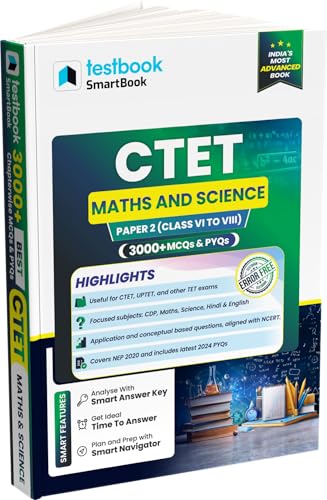
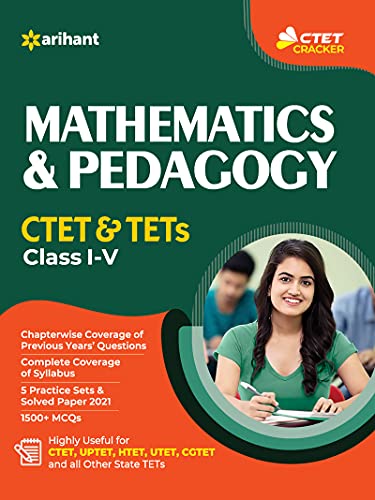
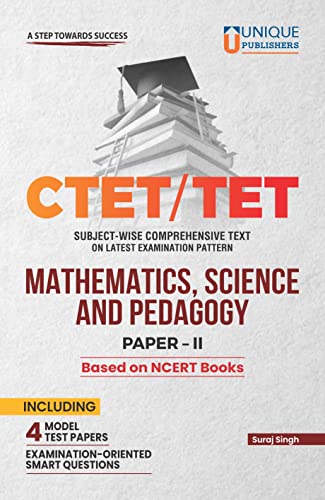
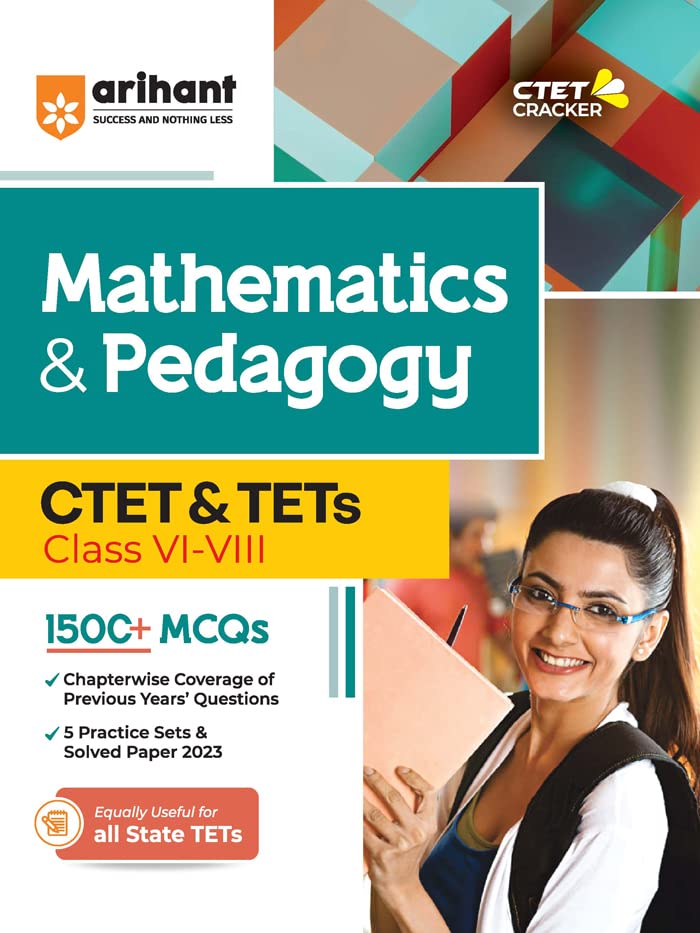
CTET Mathematics Usefull Books





- The ultimate aim of teaching Mathematics is to develop:
a) Fear
b) Logical and analytical thinking
c) Rote memory
d) Competition
Answer: b